Monthly Archives: November 2022

Dr Judith Curry Puts Facts and Perspective into the Debate on Anthropogenic Climate Change

“Allow Africa to develop its own fossil fuel resources so they can develop. Right now their resources are being exploited and sent to Europe……and help them develop some infrastructure and then Africa can take off. But because of global warming and all that kind of stuff, the powers that be, are not lending, are not giving the resources they need to develop these resources and to me, that is the biggest crime on the planet right now. It is a very different crime than the global warming activists think about”

Source: BizNewTV

“There’s no emergency” – dissident climatologist Dr Judith Curry on climate change

22 November 2022

There are particular fields in which those that stray from the official narrative are instantly shunned as dissidents. Climate change is one of these. Dr Judith Curry, Professor Emeritus and former chair of the School of Earth and Atmospheric Sciences at the Georgia Institute of Technology, has become known as one of the outspoken scientists who doubt the “scientific consensus” on climate change. As a result, she was “academically, pretty much finished off” and “essentially unhirable”. However, this didn’t slow down the bold climatologist. BizNews spoke to Curry about her views on climate change and the impact that human beings have had on the planet. A delightfully fascinating discussion ensued in which Curry explained her objection to the “manufactured consensus of scientists at the request of policy makers” and how far reality really is from the grim picture painted by environmental activists. Curry made sense of recent extreme weather events and indicated that “Earth has survived far bigger insults than what human beings are doing”. An eye-opening interview.

Resource Control or Spiritual Control: What Motives the Oligarchy? [RTF Q&A with Dr. Quan Le]

During the Roman Empire, General Agricola was the Roman Governor of Britain (1AD), who was tasked with conquering Ireland. The Romans regarded the Irish as savages not even fit to be slaves. Agricola was asked by his son-in-law, Tacitus : why bother conquering Ireland when these savages pose no threat to the Roman Empire?

Agricola gave the same answer that is the motivation of the oligarchy today, when they destroy leadership of integrity in Africa:

Agricola said: But my dear Tacitus you do not understand, even if they are not fit to be slaves, they will give hope to the people around them that it is possible to be free. So we will have to crush them in order to show those savages that the Roman power is at the top and there is no way to resist them.

Thomas Sankara, President of Burkina Faso

Source: Rising Tide Foundation

To watch the full lecture by Dr. Quan Le, click here:

https://www.youtube.com/watch?v=6nwKk…

for more information, visit www.risingtidefoundation.net

Imagine Project Iron Boomerang in West to Central Africa

What if there was a mega-infrastructure project to produce all of West Africa`s steel….from the iron ore super deposits of Guinea and of Sierra Leone,  connecting to steel mills like Maluku in DRC that is powered by the Inga Dam….

Source: Australian Citizens Party

Project Iron Boomerang is an AUD$100 billion ($US70bn) infrastructure project for Australia that would revolutionise the global steel making industry; revive Australian manufacturing; resurrect value-adding sectors; and permanently employ tens of thousands of people. It involves building a 3300 km heavy freight transcontinental rail line, rail rolling stock, ten steel mills, two dock-locked ports, and a fleet of more than 50 specialty ships, in order to both produce and export 44 million tonnes of first stage steel a year. On 5 September 2022, the Australian Senate voted to launch an Inquiry into the Project for the first time. In this interview, we speak to two of the experts who first developed the idea in 2005 and have championed it ever since.


The Importance of Nioussérê Kalala Omotunde’s Work

re posted from                                    AFRICAN HERITAGE

The Importance of Nioussérê Kalala Omotunde’s Work
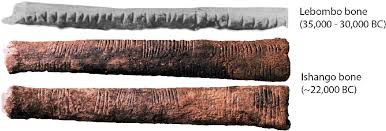
Today, education in Africa is Eurocentric, meaning that African history is rarely well-taught in African schools. In Francophone Africa, the school manuals are written by Frenchmen on the continent, or in France, so there is barely any emphasis on Africa. We learn about Europe, China, Japan, Napoleon, all the French dynasties, wars, etc, but very little about OUR history. Thus, most Africans grow up without knowing anything about the Ishango bone, the Blombos Cave, Lucy, the Lebombo bone, or the fact that Pythagoras or Thales theorems were actually written in Egypt by the scribe Ahmose over 1000 years before Pythagoras visited Africa; or even that C-sections were a normal part of African medicine for centuries while in Europe, women were still dying during pregnancies, or even that ancient Egyptians were black! There are countless examples showing that the falsification of African history has been ongoing for centuries, and that there is so much missing in African school manuals.

A Conical tower at Great Zimbabwe

Why is Nioussérê Kalala Omotunde’s work important for Africans? NKO’s work is fundamental because he, like some other illustrious Africans, worked tirelessly to restore Africa’s place in the world


continue reading Here: Source

The Importance of Nioussérê Kalala Omotunde’s Work

Guinea, Mali Partner for Conakry-Kankan- Bamako Railway Line

re posted from                            RAILBUS

Madam Rose lauded the Transitional Government under the leadership of His Excellency Colonel Mamadi Doumbouya, who considers the mobility needs of his people and their goods.

Guinea, Mali Partner for Conakry-Kankan-Bamako Rail Line

The governments of Guinea and Mali are working closely to develop and operationlised the Conakry-Kankan-Bamako railway line, Madam Rose Kasso Tinguiano, Deputy Director-General of Guinea’s National Railway Agency (Societe Nationale des Chemins de fer de Guinee, SNCFG) has disclosed.

Speaking at the RailAfta Conference held in Abuja this week, the Guinean official presented an overview of Guinean railway agenda which she narrated was closely tied to the mining sector, explaining that both Conakry and Bamako are passionate about railway linkage between both countries.

She informed that the authorities of two brotherly neighboring countries, Republics of Guinea and Mali, recently launched the reconstruction project of Conakry-Kankan-Bamako line as part of ECOWAS recommendations, advocating that African coastal countries should cooperate with landlocked countries in order to bolster trade and mobility.

Aside linking both countries, she said the line was expected to connect Niger Republic by the way from Burkina Faso.

continue reading HERE: Source:

Guinea, Mali Partner for Conakry-Kankan-Bamako Rail Line

Rail Conference “POWERING AFCFTA WITH SUSTAINABLE RAILWAY DEVELOPMENT”

“AfCTA ( African Freetrade Continental Trade Area) cannot succeed if you do not have railway connectivity in Africa” – Olawale Rasheed, Director, National Chamber Policy Centre of Abuja

re posted from                                       RAILBUS


Rail Conference Communique: African Nations Must Synergise on Rail Devt

COMMUNIQUE – INTERNATIONAL RAILWAY CONFERENCE ORGANIZED BY THE FEDERAL MINISTRY OF TRANSPORTATION IN COLLABORATION WITH ABUJA CHAMBER OF COMMERCE AND INDUSTRY AND AFRICAN RAILWAY CONSUKTING LIMITED HELD AT THE ABUJA TRADE AND CONVENTION CENTER, ON 15TH NOVEMBER, 2022 WITH THE THEME: “POWERING AFCFTA WITH SUSTAINABLE RAILWAY DEVELOPMENT”

Overview

The First Edition of the International Railway Conference Abuja 2022 aimed at reverberating the need important role and impact of railway development to Africa’s socio-economic development and integration through the African Continental Free Trade Area.

The event organized by the Abuja Chamber of Commerce & Industry, in partnership with the Federal Ministry of Transportation and Africa Railway Consulting Limited was held on the 15th November 2022 at the Trade & Convention Centre, Abuja to recalibrate the significance of railway connectivity to the realization of African economic integration through African Continental Free trade Area. National governments will present rail investment opportunities. The event also had an exhibition component alongside a B2B, G2B, G2G interactive and networking opportunities.

continue reading HERE: Source:

Rail Conference Communique: African Nations Must Synergise on Rail Devt


Robert Frost and the Cuban missile crisis [Gerald Therrien RTF Lecture]

JFK, the last great American president, sent a poet to Russia to make peace…how amazingly beautiful. Nowadays,  those who call for peace are called traitors. Incredibly moving and inspiring lecture, a message needed in current times

Source: Rising Tide Foundation

15 November 2022

1962, like today, was a very dangerous time in history, when the world faced the threat of nuclear war.

But we didn’t have nuclear war, because some people found a way out of the crisis.

In 1962 Kennedy sent American poet laureate Robert Frost to Moscow as an ambassador in a cultural exchange, an exchange of poets,

In the summer of 1962, before and even during a part of the October missile crisis, Frost played the role of peacemaker.

What happens when you allow poetry to enter the realm of politics?

On Sunday Nov. 13 the Rising Tide Foundation hosted historian Gerald Therrien who answers these questions and more

www.risingtidefoundation.net

Energy Conference: South Africa needs a balance between different sources of energy

re posted from                                       POLITICS WEB.CO.ZA

He pointed out that South Africa has developed Small Modular Reactors, which is ideal for not only South Africa but also for other African countries.

He stressed that South Africans are highly competent in the field and appealed to African governments to develop the political will to rapidly advance this technology.

Energy Conference: SA needs a balance between different sources of energy

Nuclear physicist says country needs to be realistic in that coal and nuclear will be SA’s primary energy sources for foreseeable future

South Africa needs a balance between different sources of energy – let us be realistic

14 November 2022 

Today, at an energy conference in Cape Town at the Vineyard Hotel, organised by the Afrikaner Africa Initiative (AAI), dr Kelvin Kemm, a nuclear physicist and Chairperson of Stratek Global, said that the country has to be realistic.

He said that, for the foreseeable future, the primary energy source of the country would remain coal and nuclear. A rapid and chaotic transition to renewables energy could spell disaster for South Africa’s economy and would greatly compromise the future of the poorest in our society who are dependent on reliable and affordable power.

He stated that economic growth was essential, and that realistic sense had to prevail.

Kemm stated that over time it was his opinion that coal would steadily be replaced by nuclear but that this would happen over time.

He also stressed that African countries should implement sensible energy policies that puts Africa’s energy interests first.  Small Modular Nuclear Technology is now considered clean energy and will play an increasingly important role in the changing energy environment. So will other renewable energy technology, such as wind and solar, become an increasing part of the energy mix. All policy decisions should, however, not compromise Africa’s need to develop and create jobs in an ordered fashion.

He pointed out that South Africa has developed Small Modular Reactors, which is ideal for not only South Africa but also for other African countries.

He stressed that South Africans are highly competent in the field and appealed to African governments to develop the political will to rapidly advance this technology.

He pointed out that South Africa is far in advance of other countries in Europe and in Asia in the development of Small Modular Reactor technology and that we are proud world leaders in nuclear technology.

The conference – organised by the AAI, an organisation that is promoting closer cooperation between communities in South Africa – was officially opened by the Mayor of Cape Town, Geordin Hill-Lewis. Jan Oberholzer, Chief Operating Officer of Eskom, spoke about Eskom’s operations in a developing energy landscape.

Jacob Maroga, a past Chief Executive Officer of Eskom and now a director of Erinite Energy, spoke about the role of renewable energy in expanding universal access to electricity.

Various other international and domestic speakers provided opinions on how municipalities could be directly involved in assisting their citizens to access reliable energy.

Issued by Kelvin Kemm, Chairperson, Stratek Global (Pty) Ltd, 14 November 2022

Source:

https://www.politicsweb.co.za/politics/energy-conference-sa-needs-a-balance-between-diffe

President Putin to Valdai Club: Liberal Ideology Has Changed Beyond Recognition

re posted from                                    EXECUTIVE INTELLIGENCE REVIEW

his article appears in the November 11, 2022 issue of Executive Intelligence Review.

President Putin to Valdai Club: Liberal Ideology Has Changed Beyond Recognition

[Print version of this article]

View full size

kremlin.ru
President Vladimir Putin addresses the final, plenary session of the 19th meeting of the Valdai International Discussion Club. Moscow, Oct. 27, 2022.

Nov. 4—Russian President Vladimir Putin addressed the annual meeting of the international Valdai Discussion Club on Oct. 27 in Moscow, titled this year, “A Post-Hegemonic World: Justice and Security for Everyone.” It was the 19th meeting of the prestigious discussion club founded in 2004 near Lake Valdai, midway between Moscow and St. Petersburg. The four days of sessions were attended by 111 experts, diplomats, and economists from 41 countries, as well as by top Russian policymakers from the public and private sectors.

After Putin’s hour-long address, delivered on the fourth and final day of the conference, he answered questions from experts from around the world for nearly three hours. In the course of the session, he developed several major themes: (1) the threat of imminent nuclear war coming from the West is immediate and pervasive, with many leaders in the West engaging in repeated talk of “winning” a nuclear war against Russia; (2) the repeated refusal of the West to negotiate has created a situation today more dangerous than the 1962 Cuban Missiles Crisis; (3) the drive to “cancel culture” in the West—typified by the banning of Tchaikovsky, Dostoevsky, and others—is today’s form of the mass book burnings by the Nazis in the 1930s; and (4) a new international trade system is forming based on settlements in national currencies, and on securing for every nation the right to advanced economic development.

The official transcription of President Putin’s speech and the question and answer session that followed is available from the President of Russia’s website. Excerpts follow here.

President Putin
to the Valdai Discussion Club

We have used the Valdai Club platform to discuss, more than once, the major and serious shifts that have already taken place and are taking place around the world; the risks posed by the degradation of global institutions; the erosion of collective security principles and the substitution of “rules” for international law. I was tempted to say “we are clear about who came up with these rules,” but, perhaps, that would not be an accurate statement. We have no idea whatsoever who made these rules up, what these rules are based on, or what is contained inside these rules.

It looks like we are witnessing an attempt to enforce just one rule whereby those in power—we were talking about power, and I am now talking about global power—could live without following any rules at all and could get away with anything….

Let me remind you of Russia’s proposals to our Western partners to build confidence and a collective security system. They were once again tossed in December 2021.

As a matter of fact, they always seek to aggravate matters, which is nothing new, either. This includes the stoking of war in Ukraine, the provocations around Taiwan, and the destabilization of the global food and energy markets. To be sure, the latter was, of course, not done on purpose, there is no doubt about it.

The destabilization of the energy market resulted from a number of systemic missteps made by the Western authorities. As we can see now, the situation was further aggravated by the destruction of the pan-European gas pipelines. This is something otherworldly altogether, but we are nevertheless witnessing these sad developments.


Let me remind you of Russia’s proposals to our Western partners to build confidence and a collective security system. They were once again tossed in December 2021.


Global power is exactly what the so-called West has at stake in its game. But this game is certainly dangerous, bloody and, I would say, dirty. It denies the sovereignty of countries and peoples, their identity and uniqueness, and tramples upon other states’ interests. In any case, even if denial is the not the word used, they are doing it in real life. No one, except those who create these rules I have mentioned is entitled to retain their identity: Everyone else must comply with these rules.

In this regard, let me remind you of Russia’s proposals to our Western partners to build confidence and a collective security system. They were once again tossed in December 2021.

Current developments have overshadowed environmental issues. Strange as it may seem, this is what I would like to speak about first today. Climate change no longer tops the agenda. But that fundamental challenge has not gone away, it is still with us, and it is growing.

The loss of biodiversity is one of the most dangerous consequences of disrupting the environmental balance. This brings me to the key point all of us have gathered here for. Is it not equally important to maintain cultural, social, political and civilizational diversity?

At the same time, the smoothing out and erasure of all and any differences is essentially what the modern West is all about. What stands behind this? First of all, it is the decaying creative potential of the West and a desire to restrain and block the free development of other civilizations….

Cancel Culture

Even at the very peak of the Cold War—the peak of the confrontation of the two systems, ideologies and military rivalry—it did not occur to anyone to deny the very existence of the culture, art, and science of other peoples, their opponents. It did not even occur to anyone. Yes, certain restrictions were imposed on contacts in education, science, culture, and, unfortunately, sports. But nonetheless, both the Soviet and American leaders understood that it was necessary to treat the humanitarian area tactfully, studying and respecting your rival, and sometimes even borrowing from them in order to retain a foundation for sound, productive relations at least for the future.

View full size

A.O. Bauman
View full size

Émile Reutlinger
“Western ‘guardians of liberalism and progress’ have reached the point of banning Dostoyevsky (top) and Tchaikovsky, eradicating everything that is alive and creative … in all areas….”

And what is happening now? At one time, the Nazis reached the point of burning books, and now the Western “guardians of liberalism and progress” have reached the point of banning Dostoyevsky and Tchaikovsky. The so-called “cancel culture” and in reality—as we said many times—the real cancellation of culture is eradicating everything that is alive and creative and stifles free thought in all areas, be it economics, politics or culture.

Today, liberal ideology itself has changed beyond recognition. If initially, classic liberalism was understood to mean the freedom of every person to do and say as they pleased, in the 20th Century the liberals started saying that the so-called open society had enemies, and that the freedom of these enemies could and should be restricted if not cancelled. It has reached the absurd point where any alternative opinion is declared subversive propaganda and a threat to democracy….

Fyodor Dostoyevsky prophetically foretold all this back in the 19th Century. One of the characters of his novel Demons, the nihilist Shigalev described the bright future he imagined in the following way: “Emerging from boundless freedom, I conclude with boundless despotism.” This is what our Western opponents have come to. Another character of the novel, Pyotr Verkhovensky, echoes him, talking about the need for universal treason, reporting and spying, and claiming that society does not need talents or greater abilities: “Cicero’s tongue is cut out, Copernicus has his eyes gouged out and Shakespeare is stoned.” This is what our Western opponents are arriving at. What is this if not Western cancel culture?

What can one say to this? History will certainly put everything in its place and will know whom to cancel, and it will definitely not be the greatest works of universally recognized geniuses of world culture, but those who have for some reason decided that they have the right to use world culture as they see fit. No one will even remember their names in a few years. But Dostoevsky will live on, as will Tchaikovsky, Pushkin, no matter how much they would have liked the opposite.

Standardization, financial and technological monopoly, the erasure of all differences is what underlies the Western model of globalization, which is neocolonial in nature. Their goal was clear—to establish the unconditional dominance of the West in the global economy and politics. To do that, the West put at its service the entire planet’s natural and financial resources, as well as all intellectual, human and economic capabilities, while alleging it was a natural feature of the so-called new global interdependence….

If you are democrats, you are supposed to welcome the natural desire for freedom expressed by billions of people, but no. The West is calling it undermining the liberal rules-based order. It is resorting to economic and trade wars, sanctions, boycotts and color revolutions, and preparing and carrying out all sorts of coups.

One of them led to tragic consequences in Ukraine in 2014. They supported it and even specified the amount of money they had spent on this coup. They have the cheek to act as they please and have no scruples about anything they do. They killed Soleimani, an Iranian general. You can think whatever you want about Soleimani, but he was a foreign state official. They killed him in a third country and assumed responsibility….

Over a thousand years, Russia has developed a unique culture of interaction between all world religions. There is no need to cancel anything, be it Christian values, Islamic values or Jewish values. We have other world religions as well. All you need to do is respect each other. In a number of our regions—I just know this firsthand—people celebrate Christian, Islamic, Buddhist and Jewish holidays together, and they enjoy doing so as they congratulate each other and are happy for each other.

Without exaggeration, this is not even a systemic, but a doctrinal crisis of the neoliberal American-style model of international order. They have no ideas for progress and positive development. They simply have nothing to offer the world, except perpetuating their dominance.

I am convinced that real democracy in a multipolar world is primarily about the ability of any nation—I emphasize—any society or any civilization to follow its own path and organize its own socio-political system. If the United States or the EU countries enjoy this right, then the countries of Asia, the Islamic states, the monarchies of the Persian Gulf, and countries on other continents certainly have this right as well. Of course, our country, Russia, also has this right, and no one will ever be able to tell our people what kind of society we should be building and what principles should underlie it….

Development should rely on a dialogue between civilizations and spiritual and moral values. Indeed, the understanding of what humans and their nature are all about varies across civilizations, but this difference is often superficial, and everyone recognizes the ultimate dignity and spiritual essence of people. A common foundation on which we can and must build our future is critically important….

A Dialogue of Civilizations

This is how we understand traditional values, and the majority of humanity share and accept our approach. This is understandable, because the traditional societies of the East, Latin America, Africa, and Eurasia form the basis of world civilization.

Respect for the ways and customs of peoples and civilizations is in everyone’s interest. In fact, this is also in the interest of the “West,” which is quickly becoming a minority in the international arena as it loses its dominance. Of course, the Western minority’s right to its own cultural identity—I want to emphasize this—must be ensured and respected, but, importantly, on an equal footing with the rights of every other nation.

If the Western elites believe they can have their people and their societies embrace what I believe are strange and trendy ideas like dozens of genders or gay pride parades, so be it. Let them do as they please. But they certainly have no right to tell others to follow in their steps.

View full size

Russian Presidential Executive Office
“It is only by taking responsibility for the destinies of all nations and our planet, that we shall create a symphony of human civilization.” Shown: Valery Gergiev, Artistic Director of the Mariinsky Theatre, St. Petersburg, Russia, 2018.

We see the complicated demographic, political and social processes taking place in Western countries. This is, of course, their own business. Russia does not interfere in such matters and has no intention of doing so. Unlike the West, we mind our own business. But we are hoping that pragmatism will triumph and Russia’s dialogue with the genuine, traditional West, as well as with other co-equal development centers, will become a major contribution to the construction of a multipolar world order.

I am convinced that the nations of the world will not shut their eyes to a policy of coercion that has discredited itself. Every time, the West will have to pay a higher price for its attempts to preserve its hegemony. If I were a Western elite, I would seriously ponder this prospect. As I said, some political scientists and politicians in the United States are already thinking about it.

In the current conditions of intense conflict, I will be direct about certain things. As an independent and distinctive civilization, Russia has never considered and does not consider itself an enemy of the West. Americophobia, Anglophobia, Francophobia, and Germanophobia are the same forms of racism as Russophobia or anti-Semitism, and, incidentally, xenophobia in all its guises.

It is simply necessary to understand clearly that, as I have already said before, two Wests—at least two and maybe more but two at least—the West of traditional, primarily Christian values, freedom, patriotism, great culture and now Islamic values as well–a substantial part of the population in many Western countries follows Islam. This West is close to us in something. We share with it common, even ancient roots. But there is also a different West—aggressive, cosmopolitan, and neocolonial. It is acting as a tool of neoliberal elites. Naturally, Russia will never reconcile itself to the dictates of this West.

In 2000, after I was elected President, I will always remember what I faced: I will remember the price we paid for destroying the den of terrorism in the North Caucasus, which the West almost openly supported at the time….

We thought it was in everyone’s interest. Russia, thank God, had survived all the difficulties of that time, stood firm, grew stronger, was able to cope with internal and external terrorism, its economy was preserved, it began to develop, and its defense capability began to improve. We tried to build up relations with the leading countries of the West and with NATO. The message was the same: Let us stop being enemies, let us live together as friends, let us engage in dialogue, let us build trust, and, hence, peace. We were absolutely sincere. I want to emphasize that. We clearly understood the complexity of this rapprochement, but we agreed to it.

What did we get in response? In short, we got a “no” in all the main areas of possible cooperation. We received an ever-increasing pressure on us and hotbeds of tension near our borders. And what, may I ask, is the purpose of this pressure? What is it? Is it just to practice? Of course not. The goal was to make Russia more vulnerable.…

A New System of Equal, Sovereign States

What else can I add? Russia is not challenging the Western elites. Russia is simply upholding its right to exist and to develop freely. Importantly, we will not become a new hegemon ourselves. Russia is not suggesting replacing a unipolar world with a bipolar, tripolar or other dominating order, or replacing Western domination with domination from the East, North or South. This would inevitably lead to another impasse.

At this point, I would like to cite the words of the great Russian philosopher Nikolai Danilevsky. He believed that progress did not consist of everyone going in the same direction, as some of our opponents seem to want. This would only result in progress coming to a halt, Danilevsky said. Progress lies in “walking the field that represents humanity’s historical activity, walking in all directions,” he said, adding that no civilization can take pride in being the height of development.


The transition to transactions in national currencies will quickly gain momentum. It depends on the status of the issuers of these currencies and the state of their economies, but they will be growing stronger, and these transactions are bound to gradually prevail over the others.


The significance of today’s historical moment lies in the opportunities for everyone’s democratic and distinct development path, which is opening up before all civilizations, states and integration associations. We believe above all that the new world order must be based on law and right, and must be free, distinctive and fair.

The world economy and trade also need to become fairer and more open. Russia considers the creation of new international financial platforms inevitable; this includes international transactions. These platforms should be above national jurisdictions.…

The transition to transactions in national currencies will quickly gain momentum. This is inevitable. Of course, it depends on the status of the issuers of these currencies and the state of their economies, but they will be growing stronger, and these transactions are bound to gradually prevail over the others. Such is the logic of a sovereign economic and financial policy in a multipolar world.

Multilateral cooperation in the Shanghai Cooperation Organization, among other institutions and projects, shows “the beginning of a new era, a new stage in the development of Eurasia.” Shown, the eight members of the SCO’s Heads of State Council, meeting in Samarkand, Uzbekistan, Sept. 16, 2022.

Furthermore, new global development centers are already using unmatched technology and research in various fields and can successfully compete with Western transnational companies in many areas.…

Technological development should not increase global inequality, but rather reduce it. This is how Russia has traditionally implemented its foreign technology policy. For example, when we build nuclear power plants in other countries, we create competence centers and train local personnel. We create an industry. We don’t just build a plant, we create an entire industry. In fact, we give other countries a chance to break new ground in their scientific and technological development, reduce inequality, and bring their energy sector to new levels of efficiency and environmental friendliness.

The transition to transactions in national currencies will quickly gain momentum. It depends on the status of the issuers of these currencies and the state of their economies, but they will be growing stronger, and these transactions are bound to gradually prevail over the others.

Let me emphasize again that sovereignty and a unique path of development in no way mean isolation or autarky. On the contrary, they are about energetic and mutually beneficial cooperation based on the principles of fairness and equality.

If liberal globalization is about depersonalizing and imposing the Western model on the entire world, integration is, in contrast, about tapping the potential of each civilization for everyone to benefit.

In this regard, Russia believes it is important to make wider use of mechanisms for creating large spaces that rely on interaction between neighboring countries, whose economies and social systems, as well as resource bases and infrastructure, complement each other. In fact, these large spaces form the economic basis of a multipolar world order. Their dialogue gives rise to genuine unity in humanity, which is much more complex, unique and multidimensional than the simplistic ideas professed by some Western masterminds.

Unity among humankind cannot be created by issuing commands such as “do as I do” or “be like us.” It is created with consideration for everyone’s opinion and with a careful approach to the identity of every society and every nation. This is the principle that can underlie long-term cooperation in a multipolar world.

In this regard, it may be worth revising the structure of the United Nations, including its Security Council, to better reflect the world’s diversity. After all, much more will depend on Asia, Africa, and Latin America in tomorrow’s world than is commonly believed today, and this increase in their influence is undoubtedly a positive development.

Europe and the Development of Eurasia

Let me recall that the Western civilization is not the only one even in our common Eurasian space. Moreover, the majority of the population is concentrated in the east of Eurasia, where the centers of the oldest human civilizations emerged.

The value and importance of Eurasia lies in the fact that it represents a self-sufficient complex possessing huge resources of all kinds and tremendous opportunities. The more we work on increasing the connectivity of Eurasia and creating new ways and forms of cooperation, the more impressive achievements we make.

The successful performance of the Eurasian Economic Union, the fast growth of the authority and prestige of the Shanghai Cooperation Organization, the large-scale One Belt, One Road initiatives, plans for multilateral cooperation in building the North-South transport corridor and many other projects, are the beginning of a new era, a new stage in the development of Eurasia. I am confident of this. Integration projects there do not contradict but supplement each other—of course, if they are carried out by neighboring countries in their own interests rather than introduced by outside forces with the aim of splitting the Eurasian space and turning it into a zone of bloc confrontation.

Europe, the Western extremity of the Greater Eurasia, could also become its natural part. But many of its leaders are hampered by the conviction that the Europeans are superior to others; that it is beneath them to take part as equals in undertakings with others. This arrogance prevents them from seeing that they have themselves become a foreign periphery and actually turned into vassals, often without the right to vote.


The West is unable to rule humanity single-handedly and the majority of nations no longer want to put up with this. This is the main contradiction of the new era.


Now this historical period of boundless Western domination in world affairs is coming to an end. The unipolar world is being relegated into the past. We are at a historical crossroads. We are in for probably the most dangerous, unpredictable and at the same time most important decade since the end of World War II. The West is unable to rule humanity single-handedly and the majority of nations no longer want to put up with this. This is the main contradiction of the new era. To cite a classic, this is a revolutionary situation to some extent—the elites cannot and the people do not want to live like that any longer.

This state of affairs is fraught with global conflicts or a whole chain of conflicts, which poses a threat to humanity, including the West itself. Today’s main historical task is to resolve this contradiction in a way that is constructive and positive.

The change of eras is a painful albeit natural and inevitable process. A future world arrangement is taking shape before our eyes. In this world arrangement, we must listen to everyone, consider every opinion, every nation, society, culture and every system of world outlooks, ideas and religious concepts, without imposing a single truth on anyone. Only on this foundation, understanding our responsibility for the destinies of nations and our planet, shall we create a symphony of human civilization.

Source: EIR

https://larouchepub.com/