PD Lawton with Jerm Warfare on the African Integrated High Speed Railway Network
Source: UK Column and UK Column News
Africa’s Unknown High Speed Railway Network | Jerm Warfare
1 July 2026
PD Lawton explains the African Integrated High-Speed Railway Network — a 2013 project to electrify and connect all of Africa by rail. Ethiopia and Tanzania are already building; China partners genuinely on a win-win basis, whilst the West pushes a “debt trap” propaganda narrative to block development and keep Africa extracting minerals rather than industrialising. Western media ignores it almost entirely, and the main missing ingredient is political will.
The Gain-of-Function Debate Is About More Than COVID Origins
1 July 2026
The public discussion has focused largely on where SARS-CoV-2 came from. But perhaps the more important question is what biological features the virus possesses—and what those features continue to mean for patients today. Together with Dr. Shankara Chetty, I explore how receptor usage, immune dysregulation, and viral evolution intersect with recent discussions surrounding gain-of-function research. Regardless of one’s view on origins, understanding viral biology remains essential for improving patient care.
HUGE NEWS! China Just SHOCKED All EV Makers With INSANE Battery Breakthrough!
5 Jun 2026
In 2025, global sodium-ion battery production went from near zero to over 70 GWh of announced capacity, and one country controls more than 95% of it. This video breaks down the real science, the verified performance data, and the economics behind the biggest non-lithium battery shift the EV industry has ever seen. We cover independent cold-weather range testing, debunk the most viral cost claim on the internet with third-party research data, and show which automakers are already putting sodium-powered EVs into mass production this summer. Every number in here is sourced. The part about who actually wins the sodium race is the detail almost nobody is covering yet.
Another Attack on Niger International Airport Last Week
On By Dr. Y.
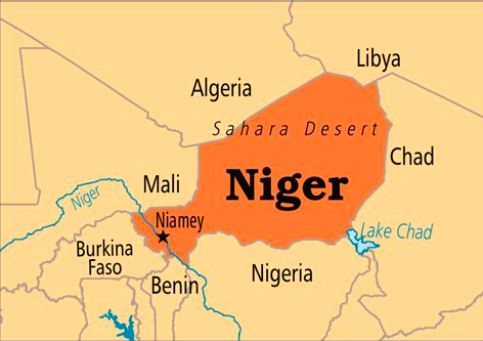
Map of Niger
Last Thursday, there was another attack on Niger’s main airport, the Diori Hamani International Airport in Niamey. In the early hours of the morning, inhabitants of the capital Niamey heard gunshots. This new wave of attacks by gunmen is said to have killed 11soldiers and 2 civilians on the government side, while government forces repelled the attack and killed 22 assailants. According to the government statement read out on state television, 20 people were arrested and assorted weapons seized. A large cache of weapons including RPG-7 launchers, AK-47 rifles, explosives, grenades, communications equipment and thousands of rounds of ammunition were also reportedly seized. The assailants also mixed in with the local population to run from the government, but were caught by local residents who joined forces with soldiers to unearth them. And of course, foreign media were rejoicing and could not wait to tell us all about it. Let’s keep our countries in our heart all the time and remain strong! The enemy lurks, but we stay alert!We will never give up!
Gunmen launched a violent assault on the Diori Hamani International Airport, which serves the capital city of Niamey, Niger, in the early hours of Thursday, June 18, 2026. The attack shattered the morning calm with sustained gunfire and multiple explosions, prompting an urgent mobilization of national security forces. The incident began at approximately 6:00 a.m. local time (05:00 GMT), leading to a security standoff that lasted for nearly an hour, with intense fighting concentrated near the airport’s main gate. One local resident described the scene, noting, “I heard the first gunshots at 06:00 (05:00 local time) while I was at the mosque. But the current situation is under control.”
Government security forces acted with speed to repel the assailants after the facility’s perimeter was breached. By mid-morning, soldiers were conducting rigorous security checks on travelers and civilians along the roads surrounding the airport. While government authorities have yet to issue a formal statement, security sources confirmed that the army successfully neutralized the immediate threat and pushed back the gunmen. Reports indicate the fleeing attackers abandoned several weapons at the scene. These ongoing security challenges persist despite recent government measures to bolster defenses, which included the demolition of adjacent neighborhoods identified as “terrorist risks” and the installation of over 350 surveillance cameras to monitor the facility.
PD Lawton with Jerm Warfare : I discuss the role of insurgencies/ low-intensity wars on the African continent and how the media use perception modification to keep eyes off reality.
Source: UK Column News and UK Column
There is No Christian Genocide in Nigeria | Jerm Warfare
25 June 2026
P.D. Lawton argues that conflicts like Boko Haram are synthetic, Western-backed insurgencies designed to keep African states weak while corporations extract minerals cheaply — She cites the PMC Executive Outcomes, which routed Boko Haram in four weeks before it was dismissed so the insurgency could continue. She links this to a Kissinger-era destabilisation doctrine, flags the UK–Rwanda deal as to have funded Kagame’s Congo operations, and sees hope in the Alliance of Sahelian States (Burkina Faso, Mali, Niger), where military governments reclaim their mineral wealth and infrastructure, to include a neglected continental railway project.
The military, on their own, are completely overstretched. You can count almost over 30 terrorist operations in this country where military personnel are deployed,
Jackson-Ojo also lamented the loss of senior military officers in recent months. “Within the past three months, we have lost almost four generals and there is no reprisal attack,” he said.
He criticised the reintegration of repentant terrorists into society, arguing that the approach sends the wrong message. “I’ve never heard it anywhere in the world that terrorists who have terrorised, damaged and killed will be integrated back into society. To me, I think the government is totally helpless. Something, or many things, are wrong now,” he added.
Billions Spent on Security, Yet Nigeria Records 98 Violent Attacks in Just One Week
By Blessing Uma
The Federal Government spent N57.78 billion on security-related projects and operations between January and April 2026, even as Nigeria continued to battle widespread insecurity, with 98 criminal incidents recorded nationwide within a single week.
Data obtained from the Open Treasury Portal showed that the amount represented a 127.97 per cent increase from the N25.35 billion spent during the same period in 2025. The expenditure covered defence equipment procurement, security infrastructure, military barracks, police facilities, and other security-related projects.
Despite the increase in spending, attacks by terrorists, bandits, kidnappers and other armed groups have continued unabated in several parts of the country, prompting fresh concerns over the effectiveness of government efforts to address the security crisis.
Analysis of the Treasury Portal data revealed that the N57.78 billion spent as of April accounted for only 1.24 per cent of the N4.66 trillion allocated to security in the 2026 budget, indicating a low level of implementation within the first four months of the year.
The largest share of the expenditure, N21.39 billion, was committed to the procurement of defence equipment, representing about 37 per cent of the total security spending during the period. Another N14.16 billion was spent on security equipment, while N5.84 billion went into the construction and provision of military barracks. The government also disbursed N5.17 billion for police stations and barracks, N3.26 billion for the rehabilitation of defence equipment, N2.39 billion for defence facilities, and N2.16 billion for repairs of military barracks.
In addition, N3 billion was spent on security services, while N320.94 million was released as security votes. However, several key programmes recorded no expenditure. No funds had been released under the military operations budget line tagged “Operation Lafiya Dole and Other Operations of the Armed Forces,” despite a N500 million provision in the 2026 budget. Likewise, no money had been spent on the kitting of Armed Forces personnel, even though N2.53 billion had been earmarked for the initiative.
Compared with the same period in 2025, spending on defence equipment more than doubled, rising from N9.48 billion to N21.39 billion, while expenditure on military barracks construction increased from zero to N5.84 billion. Nevertheless, implementation rates across many security projects remained below three per cent.
The spending figures emerged as a police security report obtained by The PUNCH revealed that 98 criminal incidents were recorded across Nigeria within the last seven days. The report documented 37 homicide cases, 27 banditry attacks, 24 kidnappings, eight armed robbery incidents, and two terrorism-related attacks.
The incidents were reported in Kaduna, Katsina, Zamfara, Kebbi and several other states, involving mass abductions, attacks on rural communities, and kidnappings along major highways.
Among the most disturbing cases was the abduction of 39 residents in Zamfara State after they reportedly travelled into the Fadama Forest to negotiate peace with a notorious bandit leader, Jimo Smally.
In Katsina State, bandits blocked the Katsina-Kankara Highway and intercepted a commercial vehicle carrying 11 passengers. Security operatives later rescued nine of the victims, while the driver and another passenger remained missing.
Reacting to the situation, security analyst Lekan Jackson-Ojo described the crisis as the worst insecurity challenge in Nigeria’s history. “This is the highest level of insecurity in the military and political history of the Federal Republic of Nigeria,” he said.
According to him, the prevailing insecurity has serious economic consequences. “It is an indirect pronouncement that Nigeria is an unsafe territory now. We are having a battered economy, and there is no economy anywhere in the world that thrives under insecurity,” he stated.
Jackson-Ojo also lamented the loss of senior military officers in recent months. “Within the past three months, we have lost almost four generals and there is no reprisal attack,” he said.
He criticised the reintegration of repentant terrorists into society, arguing that the approach sends the wrong message. “I’ve never heard it anywhere in the world that terrorists who have terrorised, damaged and killed will be integrated back into society. To me, I think the government is totally helpless. Something, or many things, are wrong now,” he added.
The security expert further accused the political class of focusing more on electioneering activities than addressing the nation’s security concerns. “What preoccupies our political class is campaign, campaign, campaign and campaign. This is a sad situation,” he stressed.
Another security analyst, Chidi Omeje, argued that Nigeria’s armed forces remain overstretched despite the increased spending. “The military, on their own, are completely overstretched. You can count almost over 30 terrorist operations in this country where military personnel are deployed,” he said.
Omeje maintained that military operations alone would not resolve the country’s security challenges. “Unless we are able to deal with the root causes, we will keep going in circles. Most of the issues are born out of bad governance, wrong prioritisation, corruption and pervasive poverty, which has made people see crime and criminality as an option for survival,” he noted.
He also blamed porous borders and instability across the Sahel region for worsening insecurity in Nigeria. “From Mali to Burkina Faso to Nigeria those places are the epicentre of terrorism. Nigeria is an attractive destination because we have porous borders and poor border management,” he stated.
Calling for urgent action, Omeje said the government must demonstrate stronger leadership in tackling the crisis. “The government seems almost clueless about how to go about this matter. They are paid to find solutions — so they must find solutions,” he added.
The latest figures underscore the disconnect between increased security spending and the reality on the ground, where violent attacks continue to claim lives and disrupt communities. They also highlight the urgent need for more effective implementation of security budgets and a comprehensive strategy that addresses both the immediate threats and the underlying drivers of insecurity across the country.
On her final day as Director of National Intelligence, Tulsi Gabbard released never-before-seen communications and documents exposing Anthony Fauci’s central role in the early COVID-19 origins debate. The materials show that Fauci directed U.S. taxpayer funding toward gain-of-function research at the Wuhan Institute of Virology while simultaneously advising intelligence agencies and publicly labelling the lab-leak hypothesis a conspiracy theory.
The declassified files detail a closed information loop in which Fauci supplied NIAID-funded scientists to shape intelligence assessments, creating what critics describe as a self-reinforcing narrative favouring natural origins. They also reference retaliation against intelligence analysts who advocated examining the lab-leak possibility, with Gabbard referring those accounts to the Inspector General.
Who buys Rwanda’s smuggled coltan? The global journey of conflict coltan from DRC to the world’s electronics
Published:
M23 soldiers at the mining pits in Rubaya. Camille Laffont / AFP / Getty ImagesConflict coltan smuggled from the war-torn Democratic Republic of the Congo (DRC) is finding its way into global markets and popular consumer products, despite due diligence systems
Where have over 2,000 tonnes of smuggled conflict coltan gone?
These looted minerals come from mines in Rubaya in the Democratic Republic of the Congo (DRC), which produce 15% of the world’s tantalum, a key ingredient for electronic products found in smartphones, laptops and cars around the world.
The Rubaya mines have become a main revenue source for M23’s brutal warfare in DRC. Seizing vast areas of territory, the armed group backed by Rwanda’s military has killed thousands and displaced hundreds of thousands of civilians, abducting and torturing with impunity.
But once the coltan is smuggled to Rwanda, little is known about who buys it or where it goes.
In a year-long investigation, Global Witness followed the DRC’s conflict coltan from the mines across the border and into global supply chains. We established the complicity of Rwandan officials, as smuggling reached “unprecedented” levels.
With Rwanda’s coltan exports more than doubling over the past three years, we identified the seven companies that exported 85% of the coltan.
Through interviews with coltan smugglers, we found that at least five of these seven companies buy conflict coltan from DRC, selling it on through middlemen to smelters in China and Kazakhstan.